Is Inflation the Biggest Threat to Your Retirement Savings?

Is Inflation the Biggest Threat to Your Retirement Savings?
Inflation of 5% will cut your buying power in half in 14 years.

While there was some hope that the conflict in the Middle East would be short lived, sadly this is proving not to be the case and the impact on the world economy is mounting with every passing day.

Australians are already feeling the direct impact of this through higher fuel prices, but most economists expect this to worsen as higher transport costs feed through to higher prices for everything we buy.

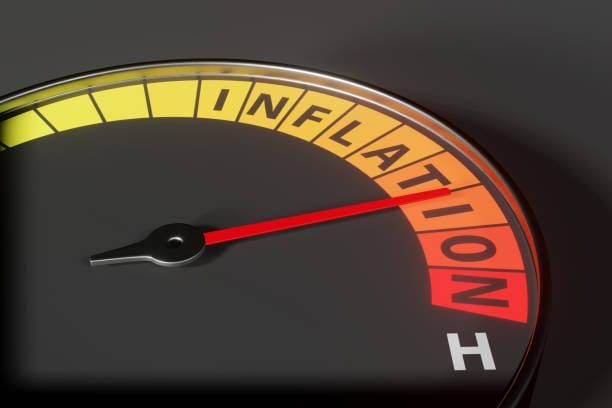
The invisible impact of this is higher inflation with economists now fearing the consumer price index will climb into the high 4 per cent regions and potentially breach 5 per cent, if the conflict drags on into next year.

While this is bad news for all Australians, particularly home buyers who can expect to see the interest rate on their home loan rise in line with inflation, it will also hit those in retirement just as hard.

Inflation is like an invisible cancer winding through the economy and impacting on interest rates, investment returns and cost of living.  However, for those in retirement it acts as a "hidden tax" on retirement income, eroding purchasing power and the real value of savings over time.

A 2.5 per cent inflation rate can halve the value of savings in roughly 28 years. High inflation forces retirees to either reduce spending or risk outliving their savings, with 5% inflation potentially halving purchasing power in just 14 years. 

One saving grace is that if you are reliant either fully or partially on the age pension, your income will be increased twice a year to reflect the impact of inflation on your buying power.

However, the challenge for retirees relying on the income from their investments is much greater. It can also prompt many self-funded retirees to take on added risks to achieve higher returns to boost their income in line with the rising cost of goods and services.

This can be a very damaging mistake as higher risks can lead to capital being reduced or in fact wiped out, so it can be a challenging time for these retirees.

There are safer strategies that can be adopted such as finding investments, where the income generated is linked to inflation increases or those that will generate sufficient capital gains to offset the impact of the steady rise in prices.

Think carefully before you act but make sure whatever your investment strategy is that it accounts for the invisible burden that is inflation.